
Credit Memo Automation: What Lending Teams Need to Know
Credit memos are the backbone of loan committee decisions. Discover how AI-assisted memo generation maintains quality while cutting preparation time by 80%.
Why Credit Memos Still Take So Long
Ask any commercial loan officer what slows down deal origination, and credit memo preparation is almost always in the top three. A well-written memo synthesizes borrower financials, industry context, collateral analysis, and risk factors into a narrative that loan committees can act on. That synthesis takes time—often 4–6 hours per deal.
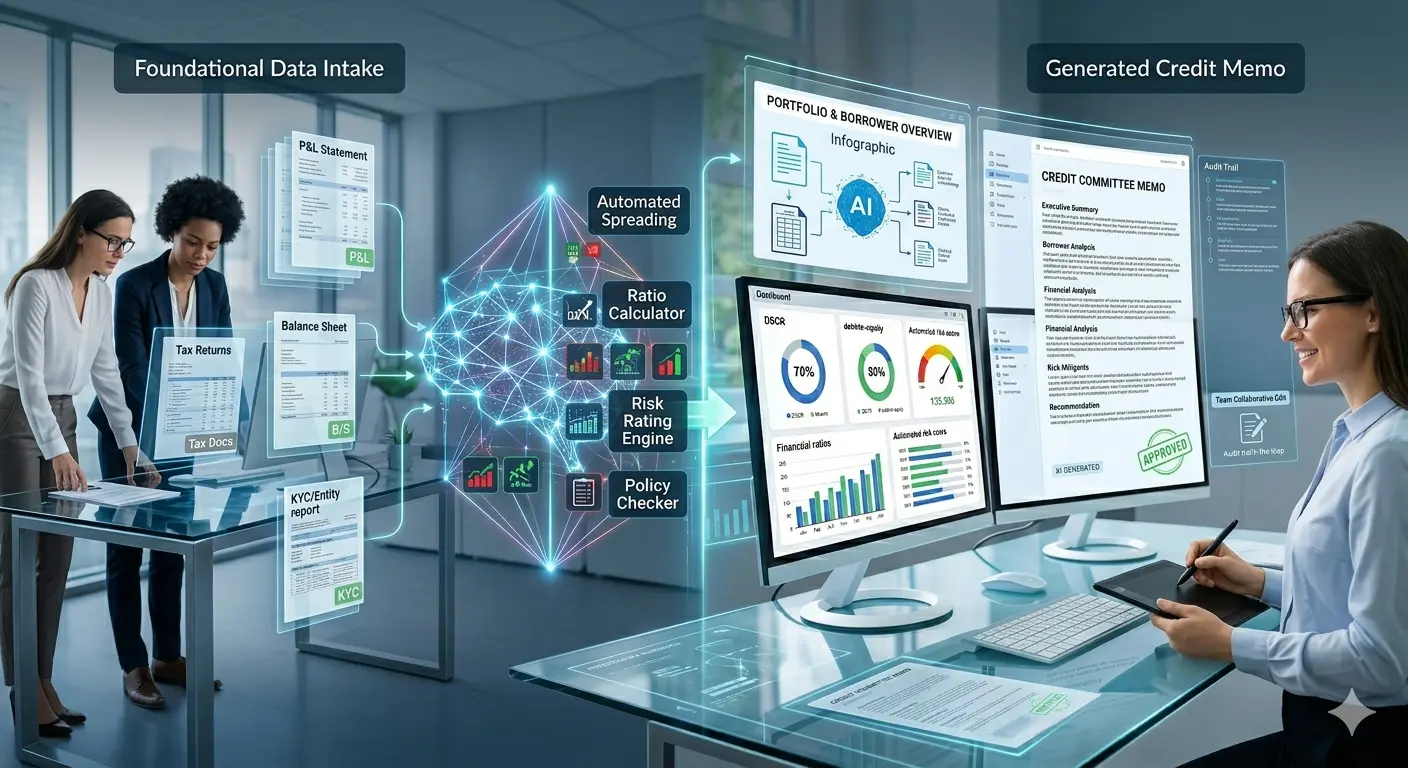
The irony is that much of the content in a credit memo is derived from data that already exists elsewhere in the workflow: spread financials, ratio calculations, policy screening results, and borrower background information. The analyst's job is to pull these threads together into a coherent story with a clear recommendation.
How AI-Assisted Memo Generation Works
Modern credit memo automation doesn't generate memos from scratch. Instead, it works as an intelligent drafting assistant that:
1. Pulls structured data from completed financial spreads, ratio analysis, and screening results 2. Generates narrative sections that describe the borrower's financial position, trends, and risk factors in clear prose 3. Applies institutional templates so every memo follows your committee's preferred format and covers required sections 4. Highlights exceptions where borrower metrics fall outside policy guidelines, ensuring nothing is buried in the narrative
The output is a draft memo—not a final product. Analysts review, refine, and add their professional judgment before submission. The AI handles the assembly; the human handles the analysis.
What Changes for the Analyst
The workflow shifts from "writing from scratch" to "reviewing and refining." Instead of staring at a blank template and toggling between six different spreadsheets, analysts start with a structured draft that already contains:
- Borrower overview and relationship history
- Financial performance summary with period-over-period trends
- Key ratio analysis with policy compliance flags
- Industry and market context
- Collateral description and coverage analysis
- Risk factors and mitigants
Analysts focus their time on the sections that require judgment: the recommendation rationale, exception justifications, and deal-specific nuances that only someone who knows the borrower can provide.
Maintaining Quality at Scale
The biggest concern lending leaders raise about memo automation is quality. Credit memos go to loan committees, examiners, and regulators. They need to be accurate, complete, and defensible.
Three principles help maintain quality in an AI-assisted workflow:
Traceability. Every data point in the generated memo should trace back to a source—a specific line item on a spread, a ratio calculation, or a screening result. If a committee member questions a number, the analyst can show exactly where it came from.
Template governance. Institutions should control the memo template, section structure, and required content. AI fills in the template; it doesn't define it. This ensures consistency across analysts and deals.
Human-in-the-loop. The memo is always a draft until an analyst signs off. AI-generated content is a starting point that accelerates the process, not a replacement for professional judgment.
Measuring the Impact
Lending teams that implement memo automation typically report:
- 70–80% reduction in memo preparation time
- More consistent memo quality across analysts (junior analysts produce memos closer to senior-level quality)
- Faster committee cycles because memos are submitted sooner and with fewer revision rounds
- Better examiner outcomes because memos are more thorough and consistently structured
Getting Started
The most successful implementations start with a single memo template—usually the one used for the highest volume deal type. Teams automate that template first, measure results, and expand to additional templates once the workflow is proven.
The goal isn't to automate away credit analysis. It's to give your best analysts more time to do what they do best: make sound credit decisions.