
Streamlining SBA Loan Processing with Intelligent Automation
SBA loans carry unique documentation and compliance demands. How AI automation helps lenders process 7(a) and 504 loans faster without added risk.
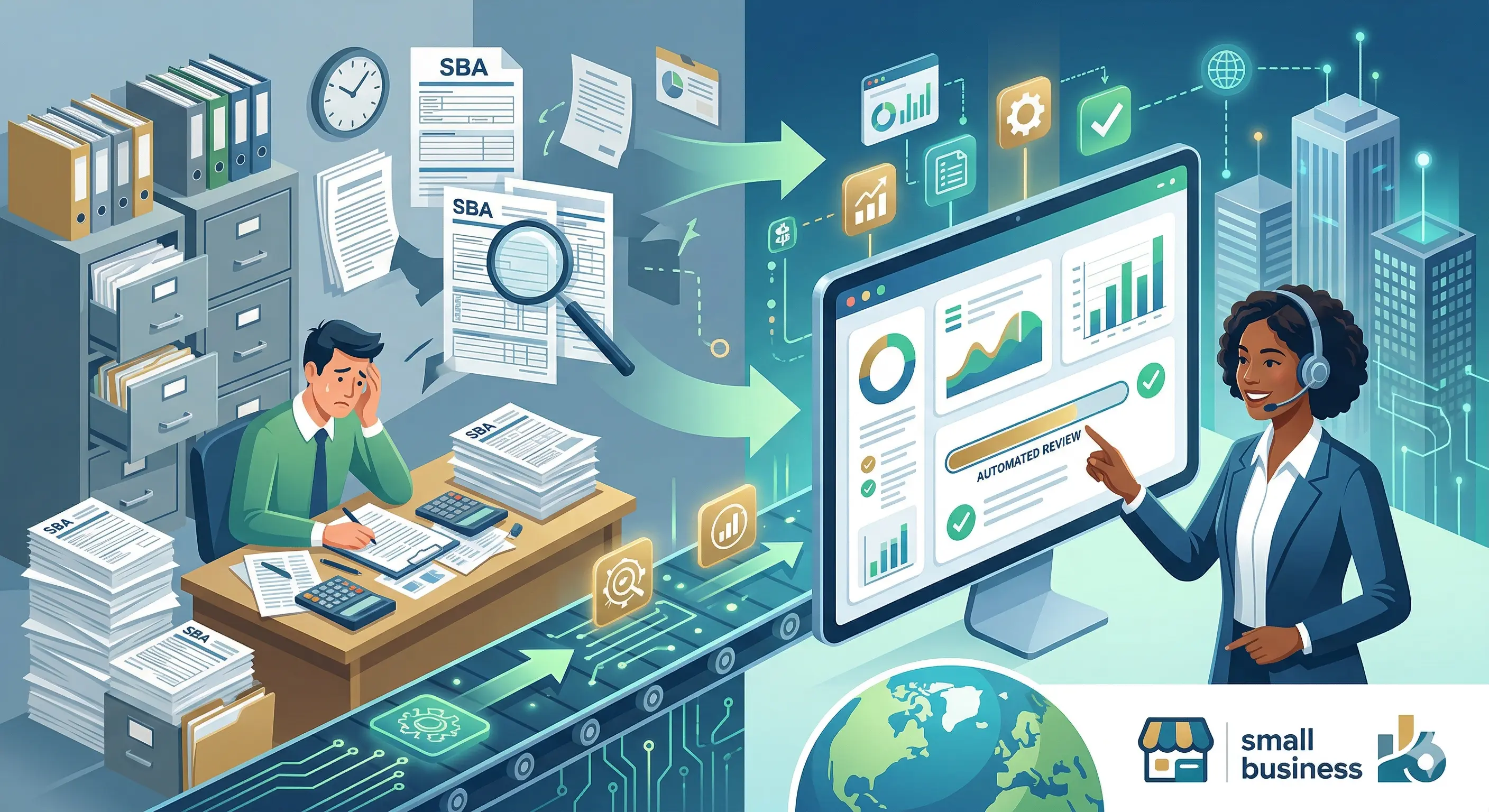
The SBA Processing Challenge
SBA lending is a growth engine for community banks and credit unions, but it comes with a documentation burden that makes conventional commercial loans look simple. Between SBA-specific forms, eligibility requirements, size standards, and use-of-proceeds rules, a single 7(a) loan can require 40+ documents and multiple compliance checkpoints.
The manual overhead is significant: SBA-focused lenders report that processing an SBA loan takes 30–50% longer than a conventional commercial loan of similar size. That overhead directly impacts profitability and capacity.
Where Automation Fits in SBA Lending
SBA loan processing has several characteristics that make it well-suited for automation:
Document-Heavy Workflows SBA loans require extensive documentation—borrower financials, business plans, SBA Forms (1919, 1920, 912), entity documents, lease agreements, and more. Automated document classification and checklist management can track what's been received, what's missing, and what needs borrower follow-up.
Standardized Eligibility Criteria SBA eligibility rules are well-defined: size standards by NAICS code, use-of-proceeds requirements, creditworthiness thresholds. These rule-based checks are ideal for automation. Instead of an analyst manually cross-referencing size standards, the system can verify eligibility as soon as borrower information is entered.
Financial Analysis Requirements SBA lenders still need to spread borrower financials, calculate key ratios, and assess repayment ability. AI spreading works the same way for SBA deals as conventional ones—extracting data from tax returns and financial statements into standardized templates.
Narrative Documentation SBA loans require detailed credit write-ups that address specific SBA requirements alongside traditional credit analysis. AI-assisted memo generation can structure these narratives to cover both lender policy and SBA-specific requirements.
Compliance Without the Bottleneck
The primary concern in automating SBA processes is compliance risk. SBA loans are subject to review by the SBA itself, and deficiencies in documentation or eligibility verification can result in denial of guaranty—leaving the lender with full exposure.
Automation actually reduces compliance risk in several ways:
Consistent checklist enforcement. Automated checklists don't forget requirements. Every deal is checked against the same complete list of required documents and eligibility criteria.
Auditable process records. When document classification, eligibility checks, and screening results are system-generated, there's a clear audit trail. Examiners and SBA reviewers can see exactly what was verified and when.
Early exception identification. Automated screening catches eligibility issues at intake, not after the loan has been underwritten. If a borrower doesn't meet SBA size standards, the team knows before investing 20 hours of analyst time.
Template standardization. When credit memos follow a consistent template that includes SBA-required sections, the risk of omitting required analysis drops significantly.
Practical Considerations for SBA Lenders
Start with What's Common Most SBA lenders have a primary product—usually 7(a) or 504. Start automation with your highest-volume product. The checklist, eligibility rules, and memo template for that product should be the first to be automated.
Map Your Current Process Before implementing any tool, document your current SBA workflow end-to-end. Identify where time is spent, where errors occur, and where deals stall. This baseline helps you measure impact and prioritize automation targets.
Keep Humans in the Loop SBA lending has nuances that require judgment—franchise eligibility determinations, change-of-ownership complexities, and unusual use-of-proceeds scenarios. Automation handles the routine; experienced SBA lenders handle the exceptions.
Plan for SBA SOP Changes The SBA updates its Standard Operating Procedures regularly. Your automation should be configurable enough to accommodate policy changes without requiring a software overhaul.
SBA 7(a) vs. 504: Different Automation Profiles
The 7(a) and 504 programs have meaningfully different processing requirements, and the automation opportunities differ accordingly.
SBA 7(a) loans tend to involve more complex borrower structures — personal guarantors with their own business interests, multi-entity ownership, and pass-through income from partnerships or S-corps. The global cash flow analysis is the most time-consuming element. Automation is most valuable in spreading across all entities and consolidating the global debt service coverage calculation.
SBA 504 loans are structured differently — a first mortgage from a conventional lender, a second mortgage from a Certified Development Company, and equity from the borrower. The underwriting focuses on the real estate collateral, the operating business's ability to service the combined debt, and job creation or community development requirements. Automation helps most with the property financial analysis (rent rolls, operating statements) and the narrative documentation of the economic development justification.
Both programs benefit from automated document checklisting — the form lists are long and specific, and manual tracking is where most delays accumulate.
Measuring the Impact of SBA Automation
The metrics worth tracking before and after implementing automation:
Cycle time. Track the number of business days from complete application to credit decision. For 7(a) loans, industry benchmarks range from 10 to 30 days; high-performing automated SBA departments can consistently hit under 15 days.
Analyst capacity per deal. Total analyst hours from package receipt to credit memo delivery. Manual SBA processing typically runs 12–25 hours per deal; automation targets 4–8 hours, with analysts spending their time on credit judgment rather than data entry.
Guaranty denial rate. If your team is tracking SBA guaranty denials (which all serious SBA lenders should be), watch whether automation's checklist enforcement and consistent documentation reduces deficiency findings.
Borrower follow-up cycles. Count the number of times analysts go back to borrowers for missing information after the initial package submission. Automated checklist completeness checking should reduce this to one cycle or zero in most cases.
The Capacity Question
For many SBA lenders, the automation conversation is really about capacity. They're not trying to reduce headcount — they're trying to process more loans with their current team. An SBA specialist who spends 40% less time on document management and data entry can handle 30–40% more deals per month.
In an SBA market where demand often outpaces processing capacity, that additional throughput translates directly to revenue. A team currently closing 8 SBA loans per month could realistically close 11–12 with the same staff after automating the document-heavy work.
For a deeper look at how SBA automation works in practice, see our SBA lending platform overview or read about the five most common loan origination bottlenecks that affect SBA teams and conventional commercial lenders alike.
Run the numbers